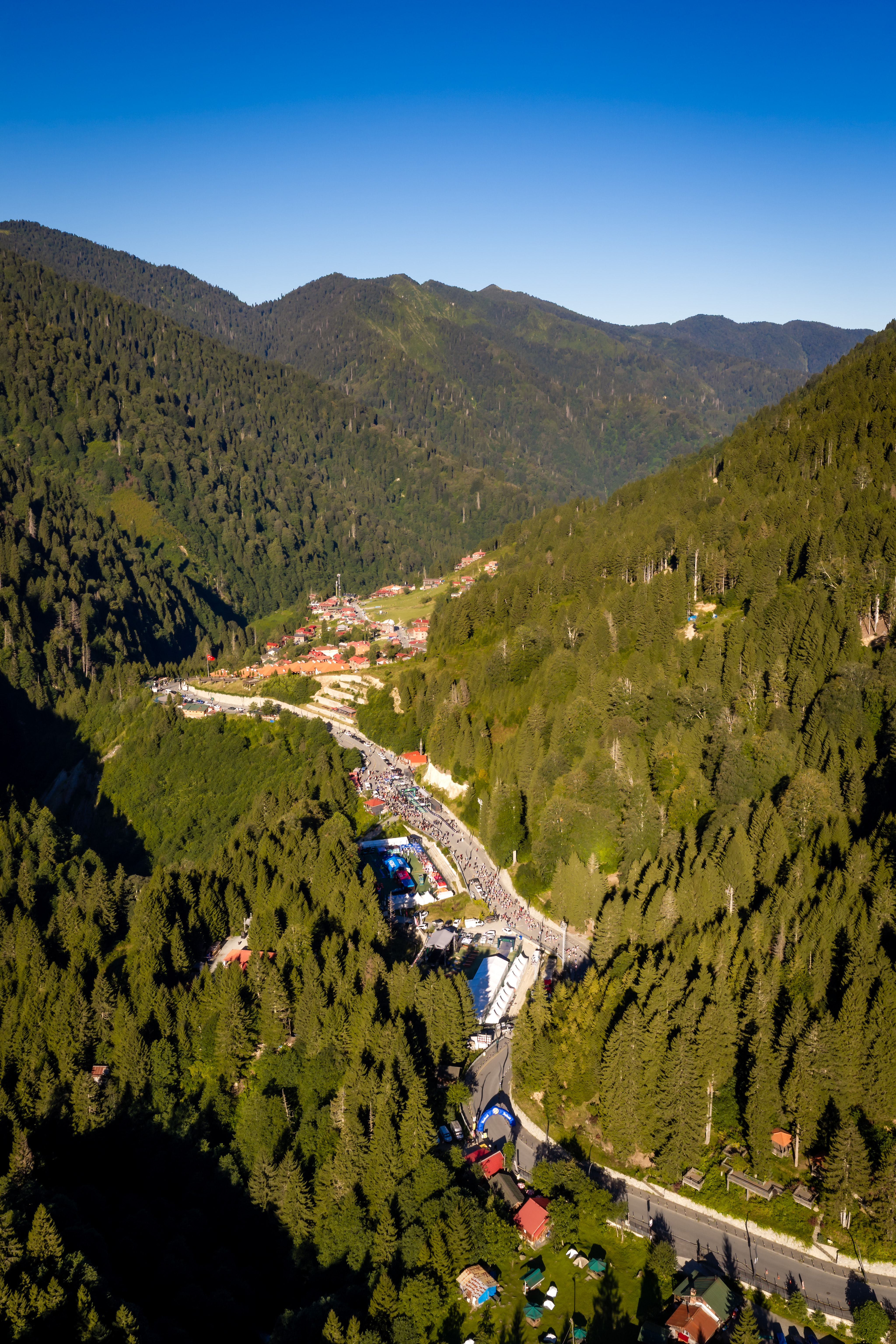


Where Old Paths Meet the World
Kaçkar by UTMB 2026 Brings More Than 2,000 Runners to Türkiye’s Black Sea Highlands
Long before GPS watches, aid stations, and UTMB banners arrived in the Kaçkars, the trails above Çamlıhemşin already carried generations of footsteps.
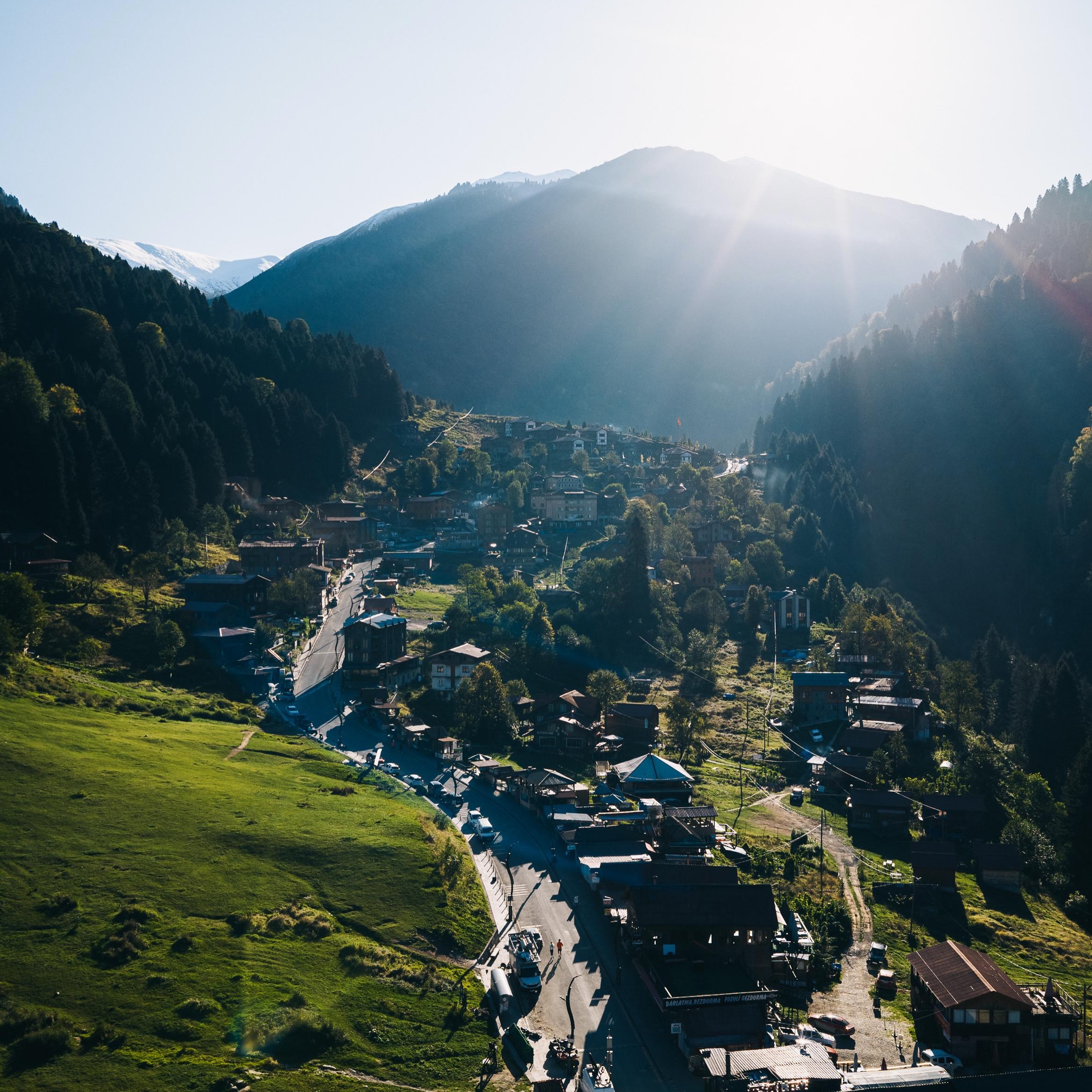
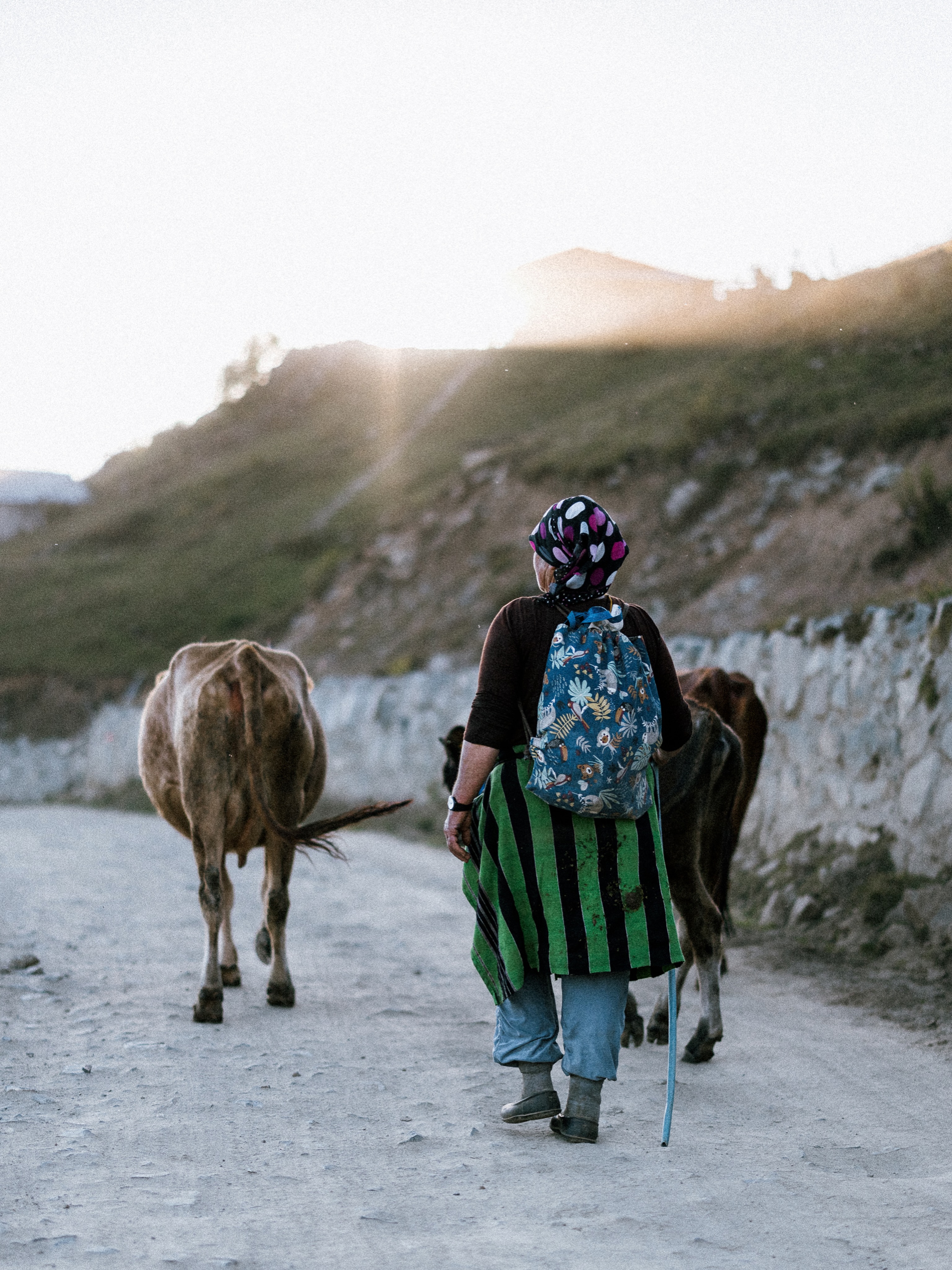
Local families walked them between mountain villages and highland settlements, moving livestock, gathering firewood, and carrying supplies on their backs along routes shaped by necessity rather than sport. In September 2026, those same paths carried more than 2,000 runners from 63 countries across six continents.
For the second edition of Kaçkar by UTMB, held September 11–13 around Ayder Plateau in Rize, one of Türkiye’s wildest mountain landscapes became the setting for four very different races: Kaçkar 100K, Kaçkar 50K, Kaçkar 20K, and Ayder 4K.
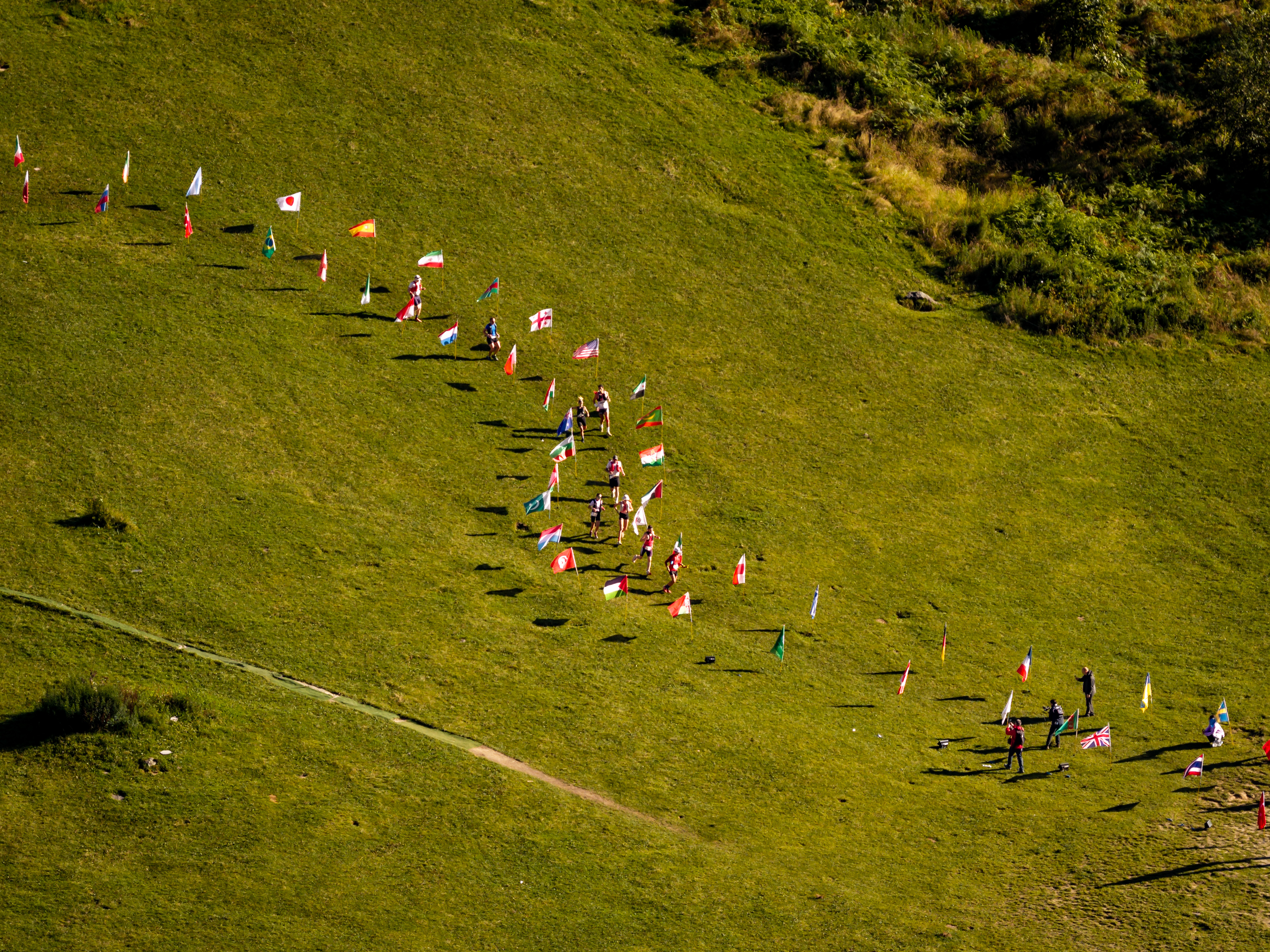
The distances changed. The mountain did not.
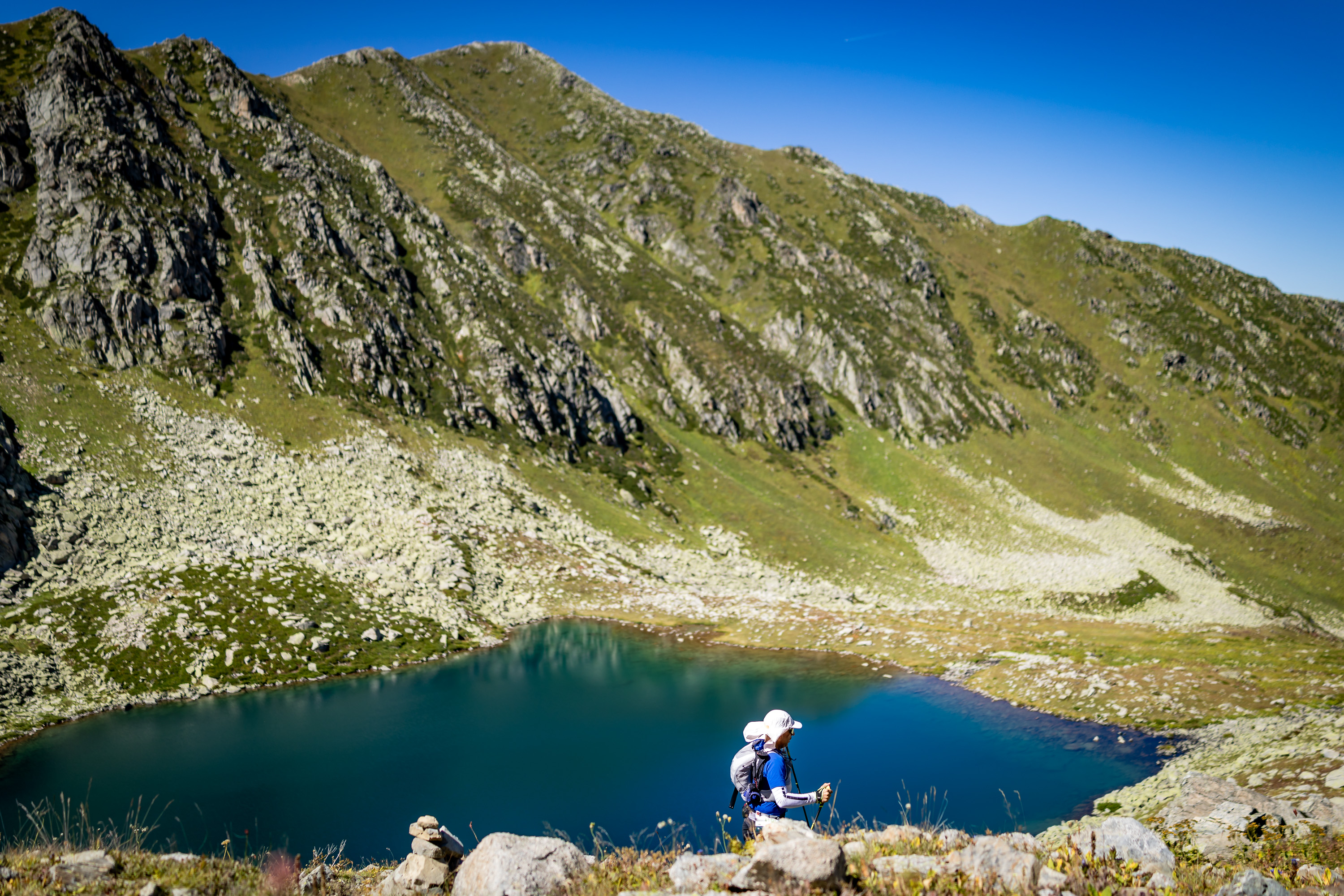
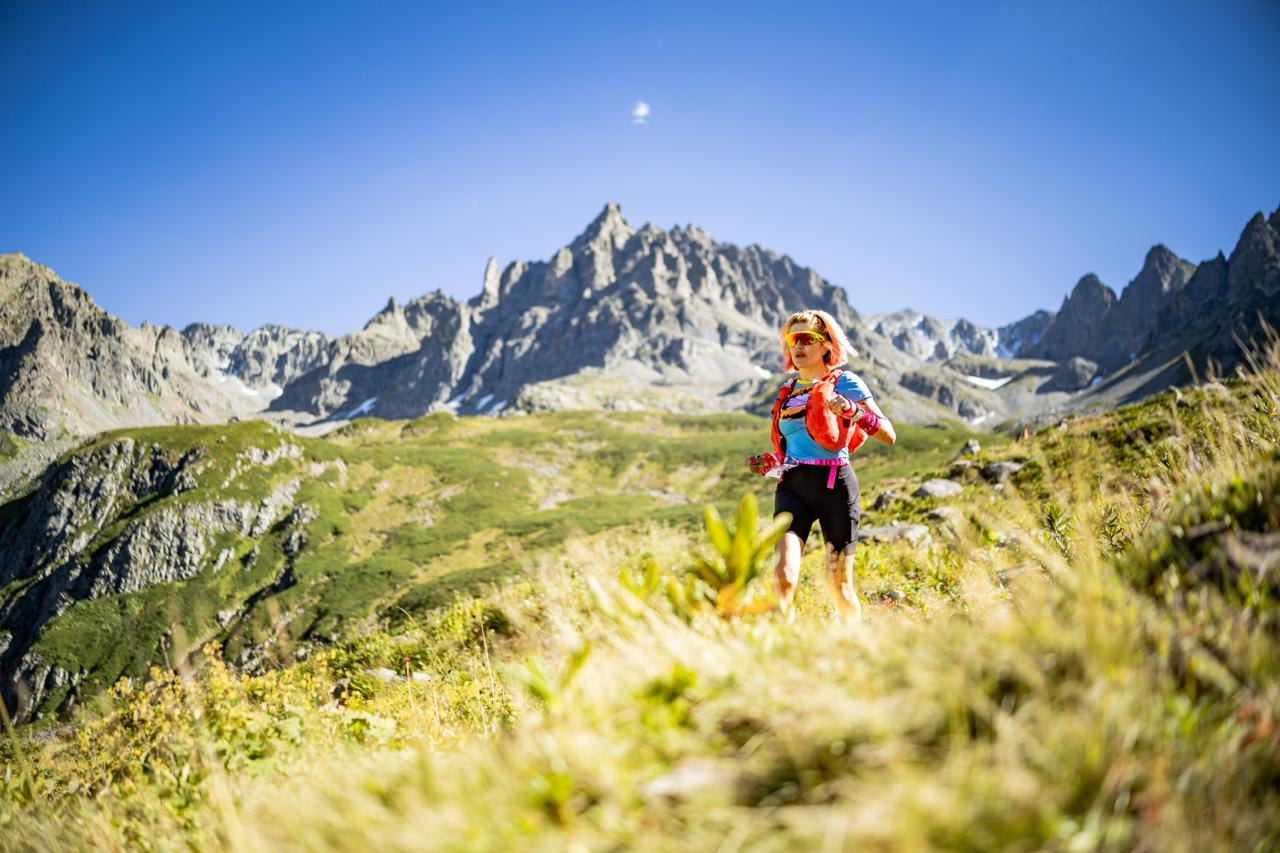
Here, runners moved through forests and river valleys, across highland meadows and old shepherd trails, past stone settlements and villages where life has followed the contours of the mountains for centuries.
This Time, the Long Road Opened
At the inaugural edition in 2025, severe weather and safety concerns forced organizers to cancel the longest race. This year, the Kaçkars allowed the full challenge to unfold.
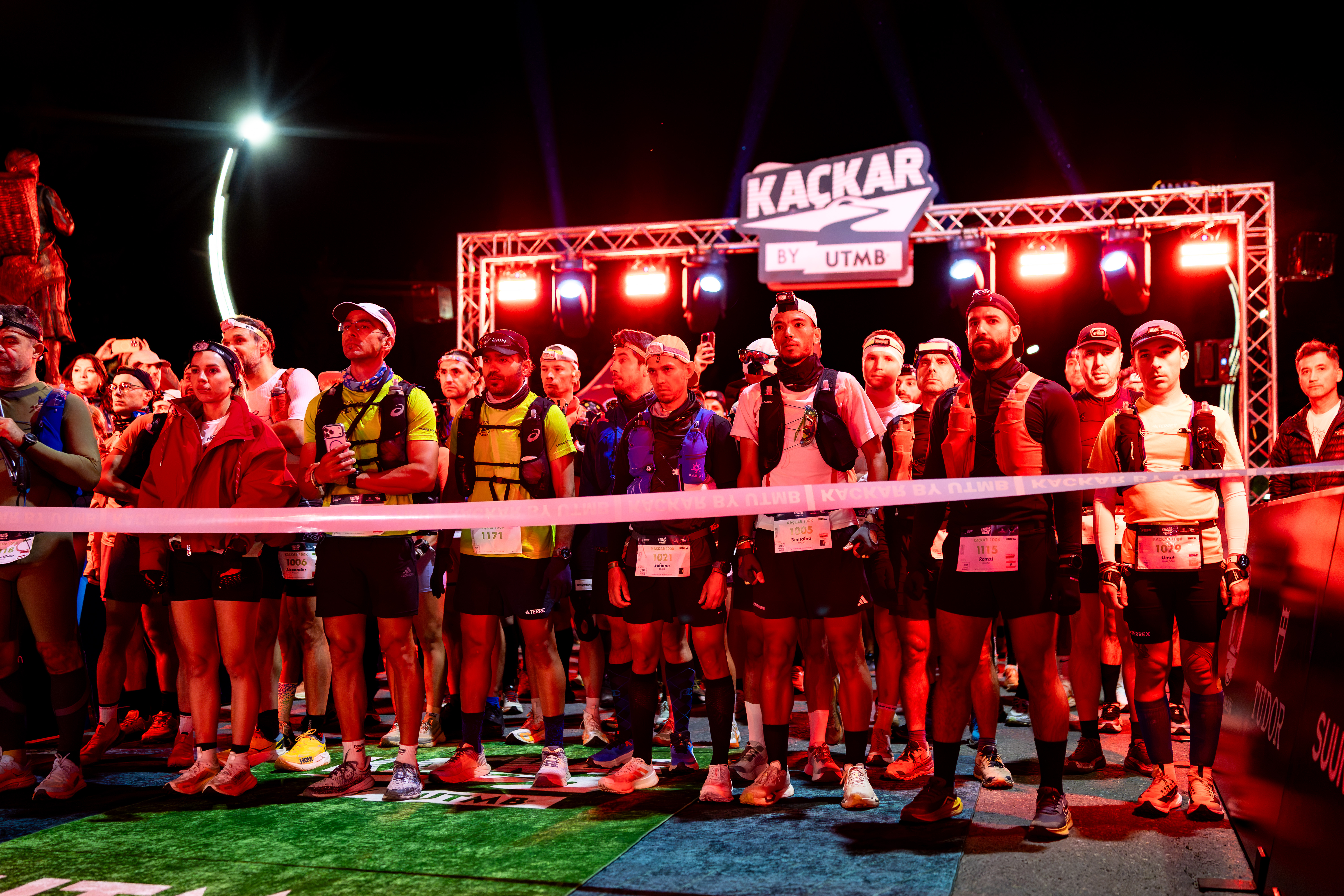
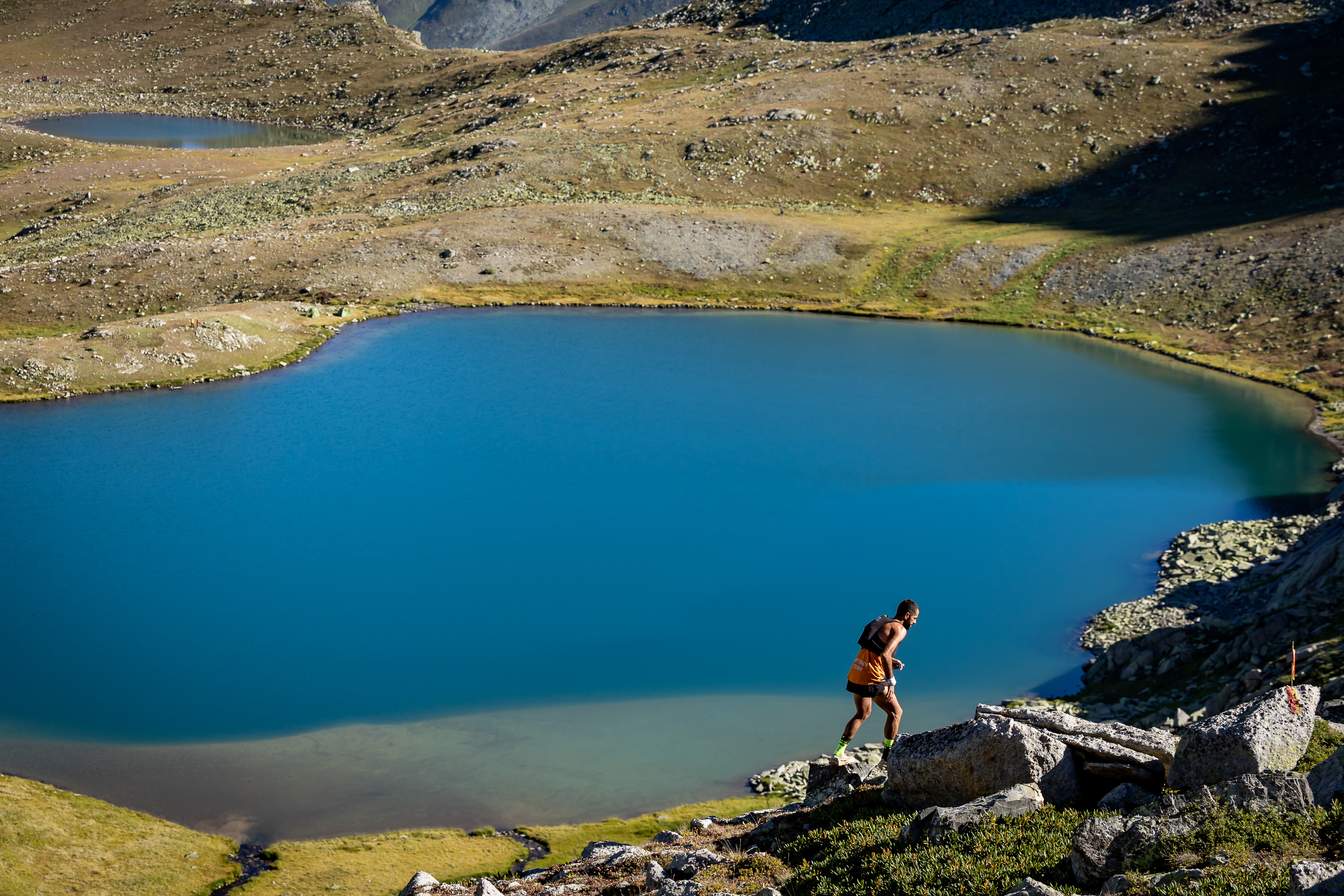
Beginning at 4 a.m., 149 runners set out on a course officially named the Kaçkar 100K but covering roughly 82 kilometers, with around 5,600 meters of elevation gain. The route climbed toward 3,200 meters, moving through high mountain passes, forests, alpine meadows, lakes, and traditional highlands, including Hazindak, Samistal, Yukarı Kavrun, Avusor, and Huser.
The 50K delivered its own formidable test: approximately 44 kilometers and more than 3,000 meters of climbing through forests and highland terrain around Kemer Mountain, Hazindak, and Samistal. The 20K offered a shorter—but hardly gentle—introduction to the same landscape, while the Ayder 4K opened the experience to newcomers and local runners.
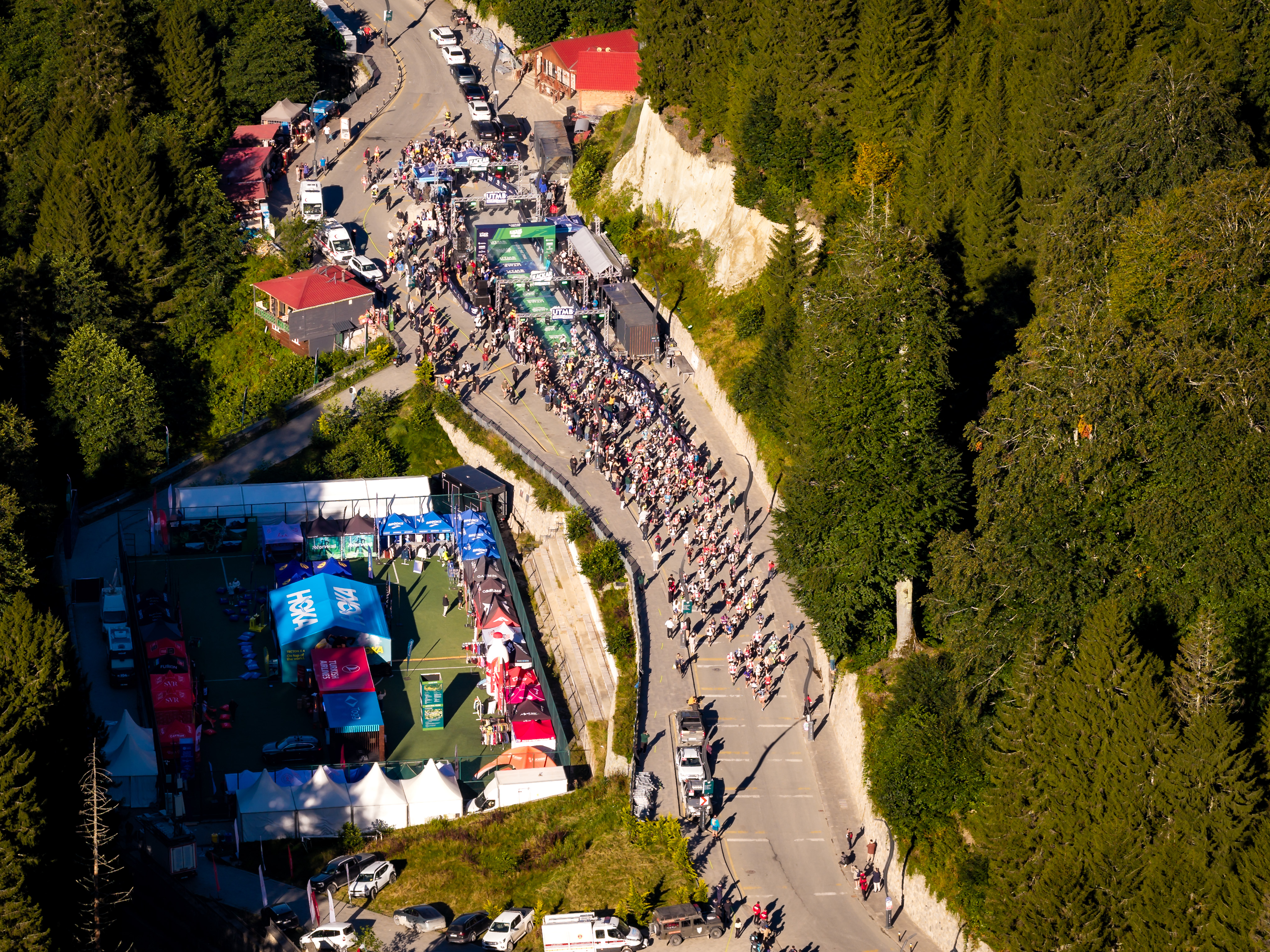
This is what gives Kaçkar by UTMB its character. The mountains are not scenery arranged around a race. They are the race.
Trails With a Memory
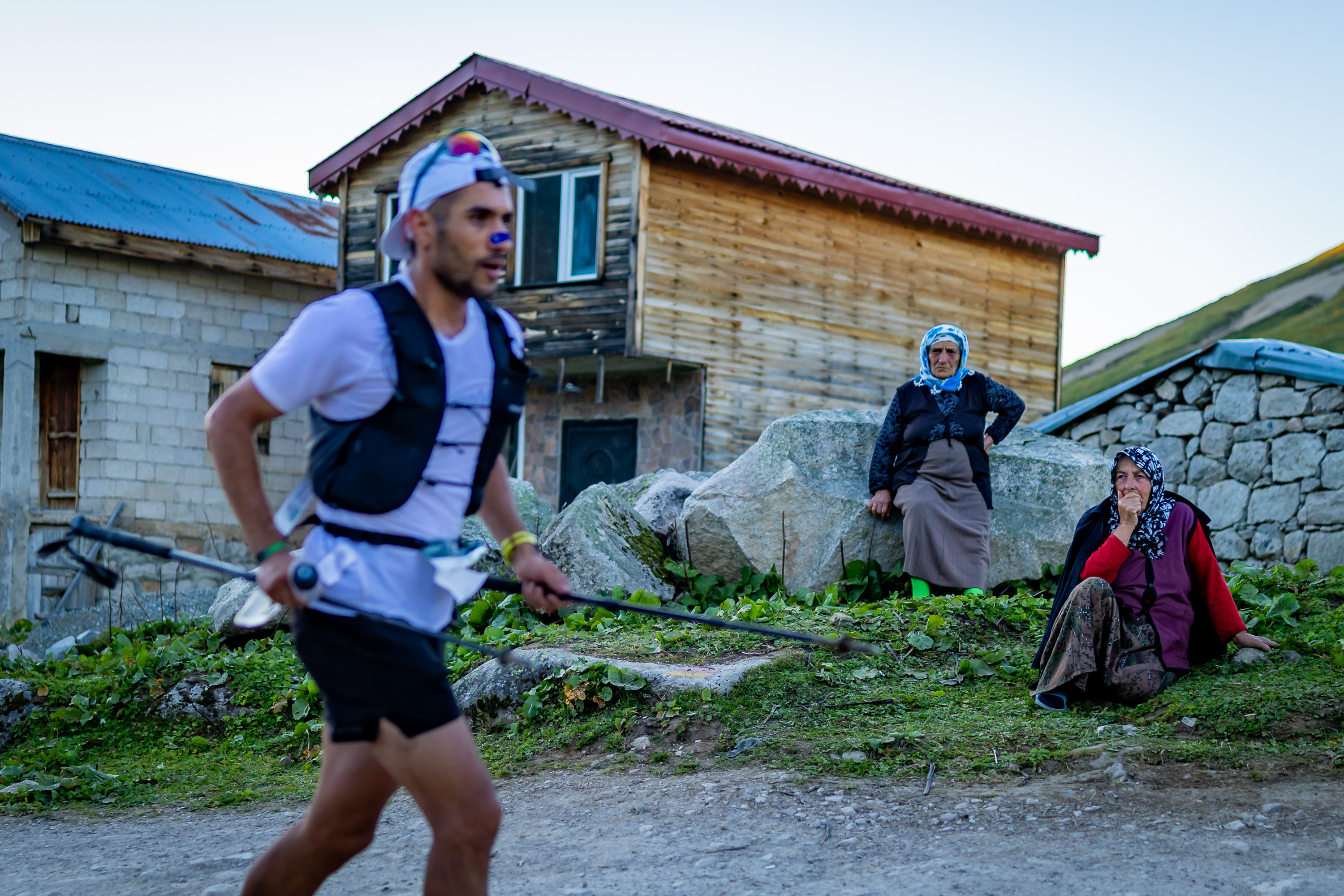
Perhaps the most powerful part of the weekend was that these routes were never invented for runners. They already had stories.
Residents remember walking these trails with cattle and carrying grass, butter, firewood, and other necessities between highland settlements at a time when there were no roads. One local resident spoke of how moving it was to see paths once used for carrying livestock and everyday necessities now filled with young athletes running for sport.
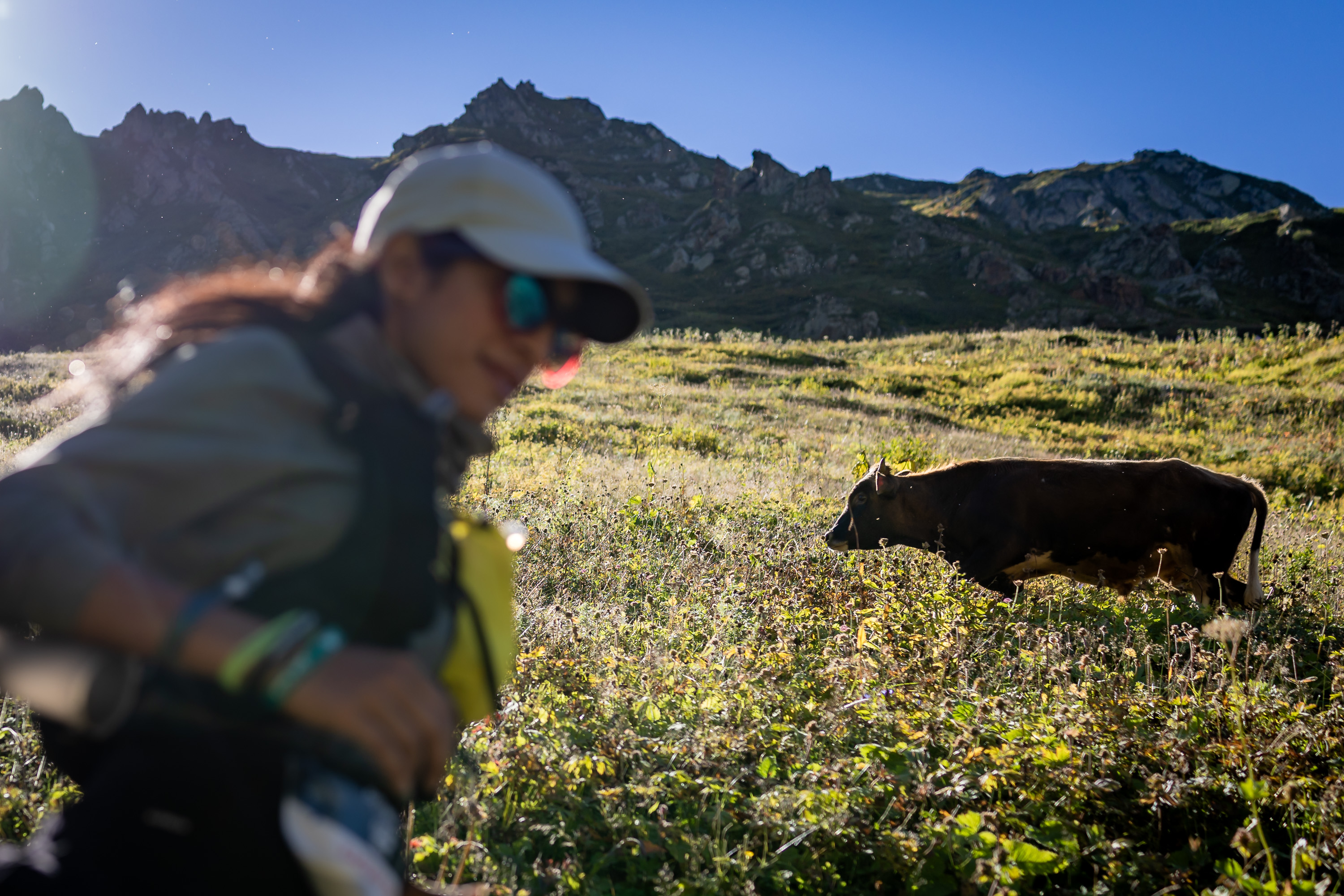
That history followed competitors through the mountains.
Runners passed centuries-old settlements and highland homes; the 50K route alone crossed Hazindak and Samistal, where stone houses dating back roughly 300 years remain part of the landscape.
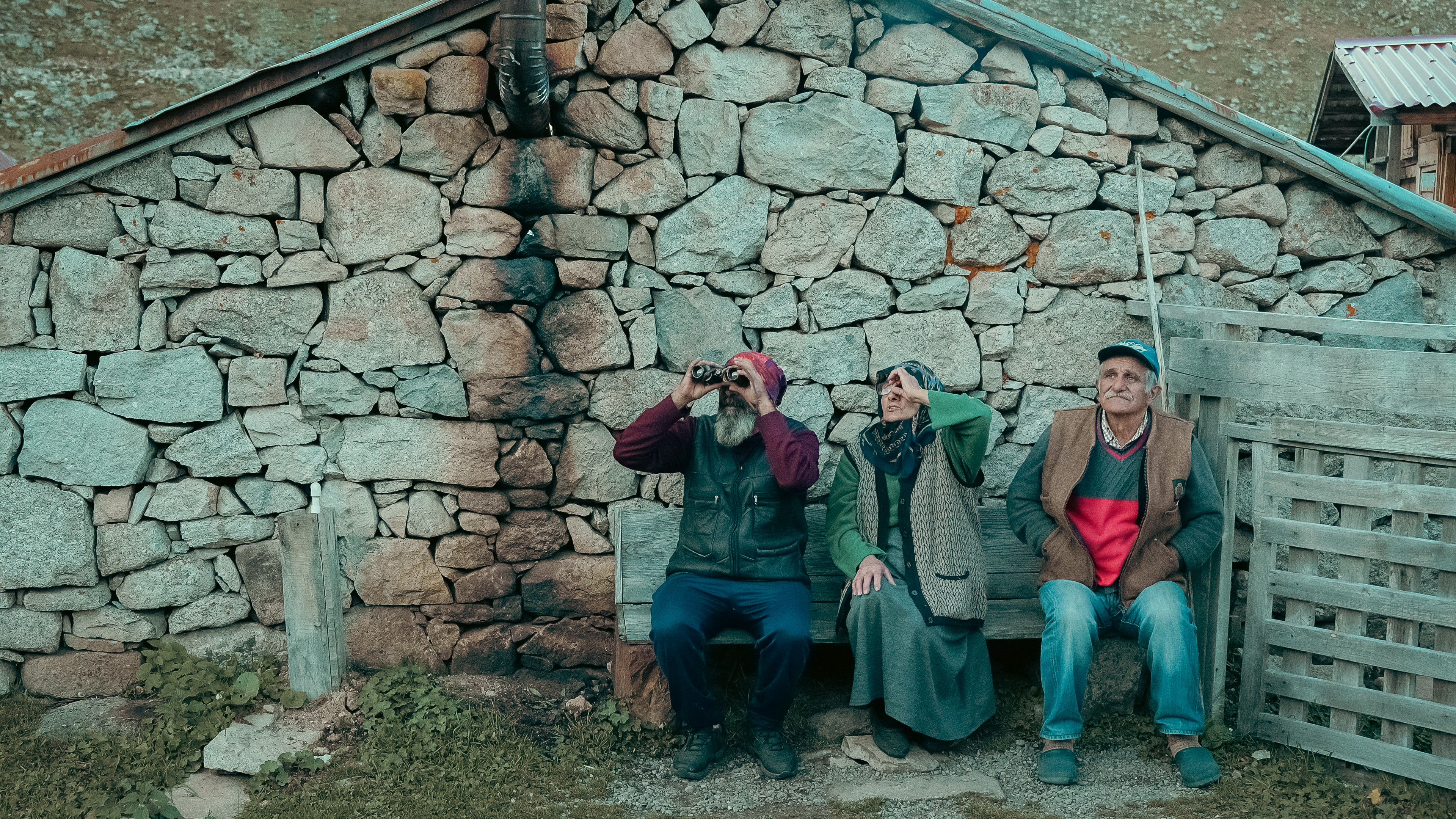
And around Ayder, the international language of trail running met the unmistakable rhythm of the eastern Black Sea. The Ayder 4K began with tulum music and horon, while participants carrying the message “Run for Climate” added an environmental theme to one of the weekend’s most accessible community races.
It was not culture placed beside the race for decoration.
It was culture already living on the trails.
When the Race Belongs to the People Who Live There
Among the thousands of international competitors, some of the weekend’s most meaningful stories came from much closer to home.
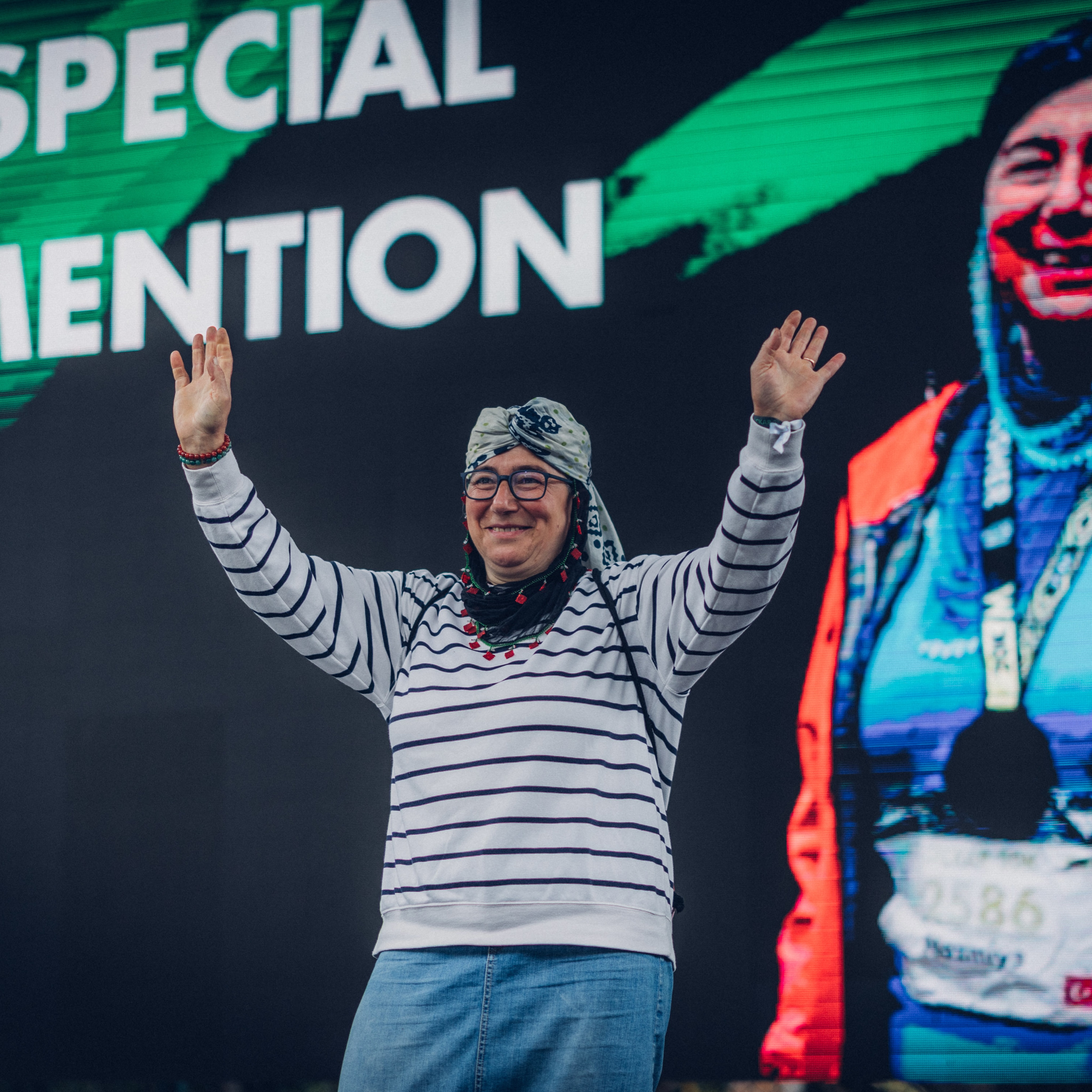
Fifty-five-year-old Ayder tourism operator Nazmiye Dalga returned to the 20K for a second consecutive year after completing the race in 2025, once again taking on trails that belong to her own landscape.
And in the Ayder 4K, one family produced perhaps the clearest image of what the event can mean locally.
Nergis Durmuş won the women’s race in 26:19. Her brother Ömer Asaf Durmuş won the men’s race in 20:14.
Two siblings. Two victories. The same mountain.
Their success was singled out by UTMB officials as an example of how familiar local paths can become routes toward competitive sport for a new generation.
That may be one of the most important stories Kaçkar by UTMB can tell. The world comes to run the Kaçkars—but the children who grow up beneath them can begin to see those mountains differently, too.
Champions Across the Kaçkars
After days of climbing, technical descents, changing mountain conditions, and thousands of meters of elevation, the podiums reflected just how international the weekend had become.
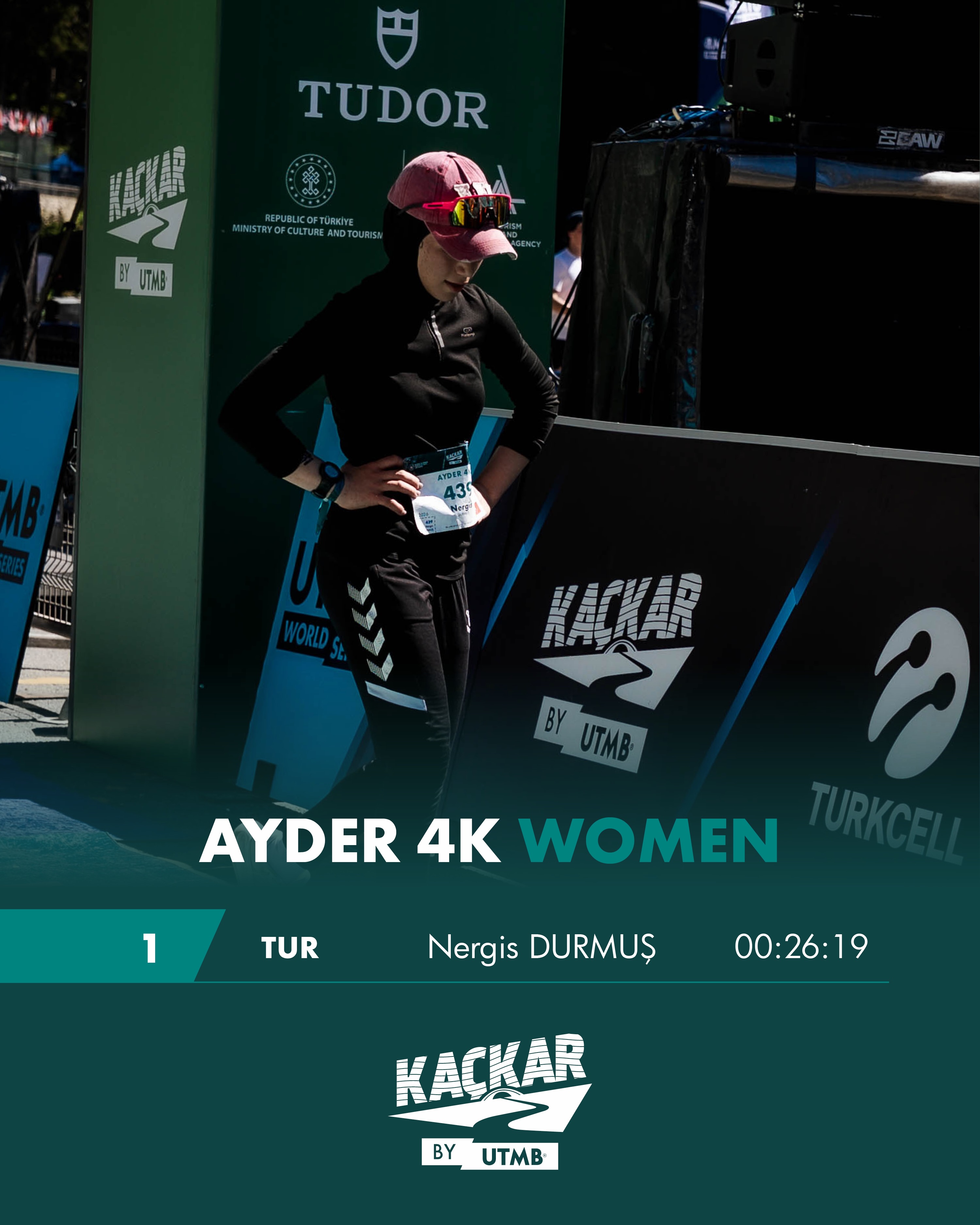
Ayder 4K — Women
🥇 Nergis Durmuş (Türkiye) — 00:26:19
🥈 Irina Petrakova (AIN) — 00:29:06
🥉 Asya Esen (Türkiye) — 00:29:57
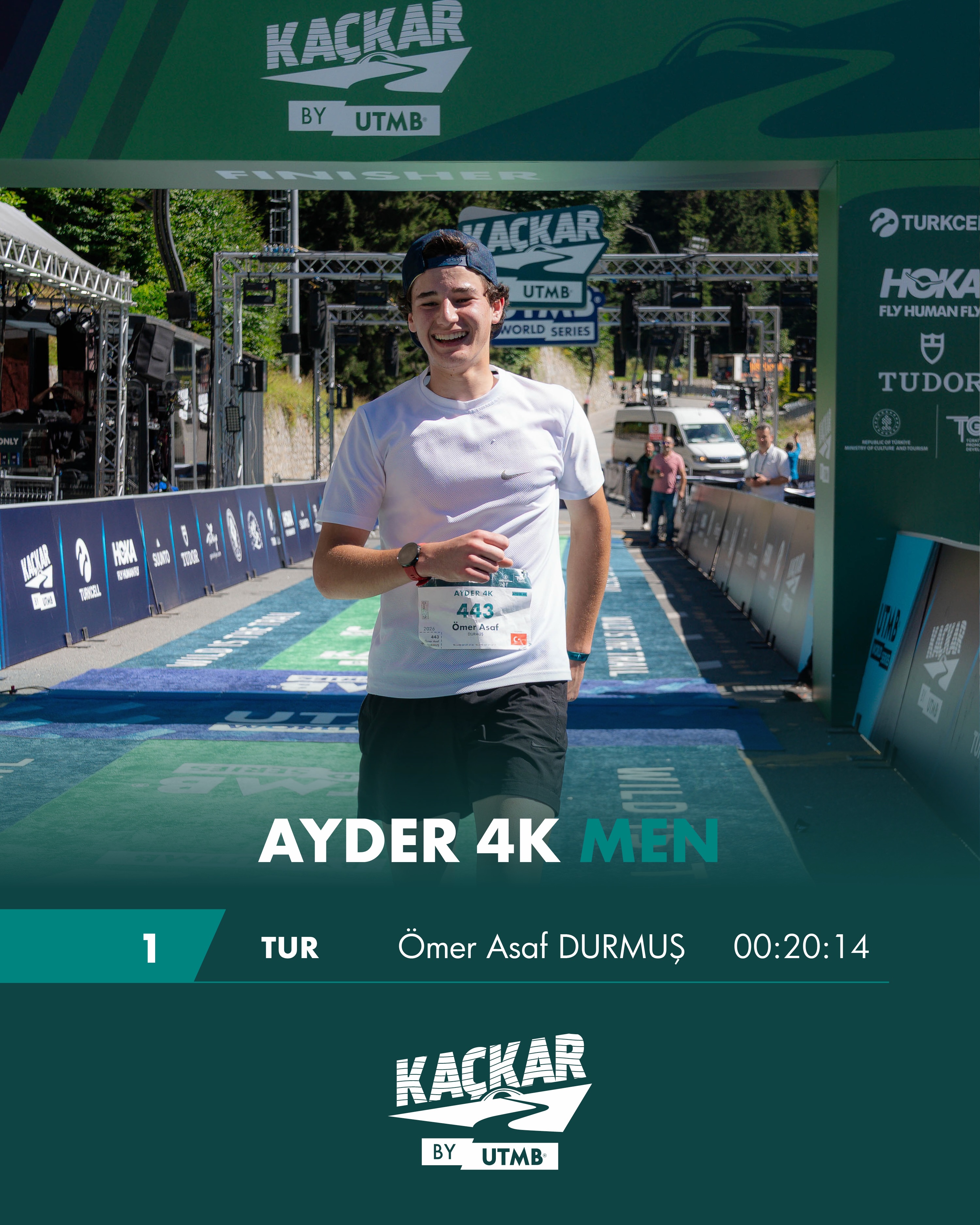
Ayder 4K — Men
🥇 Ömer Asaf Durmuş (Türkiye) — 00:20:14
🥈 Sandıkçı Doğukan (Türkiye) — 00:23:01
🥉 Durmuş Ahmet (Türkiye) — 00:26:12
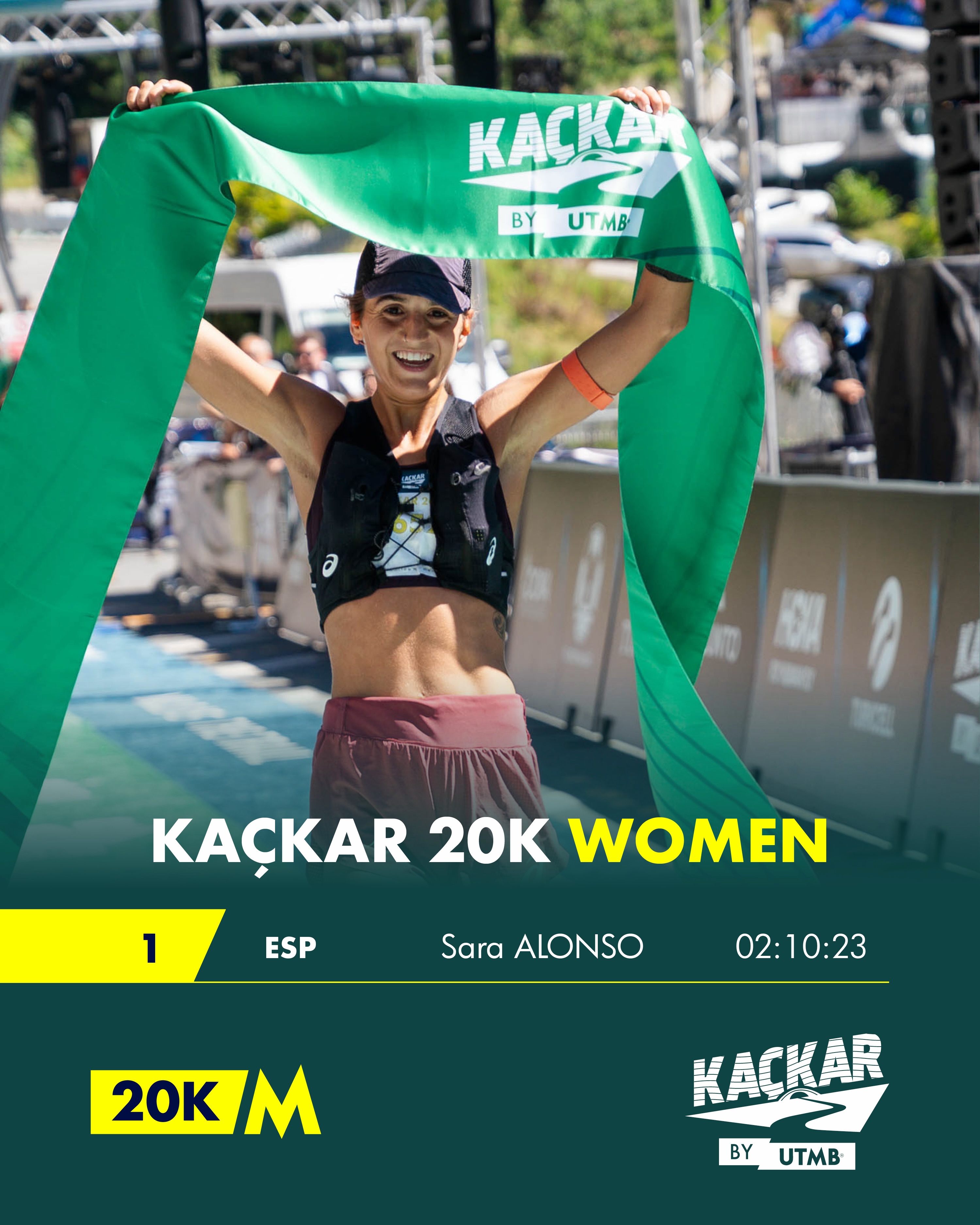
Kaçkar 20K — Women
🥇 Sara Alonso (Spain) — 02:10:23
🥈 Daria Boichuk (Ukraine) — 02:46:50
🥉 Tuğba Akın (Türkiye) — 03:01:53
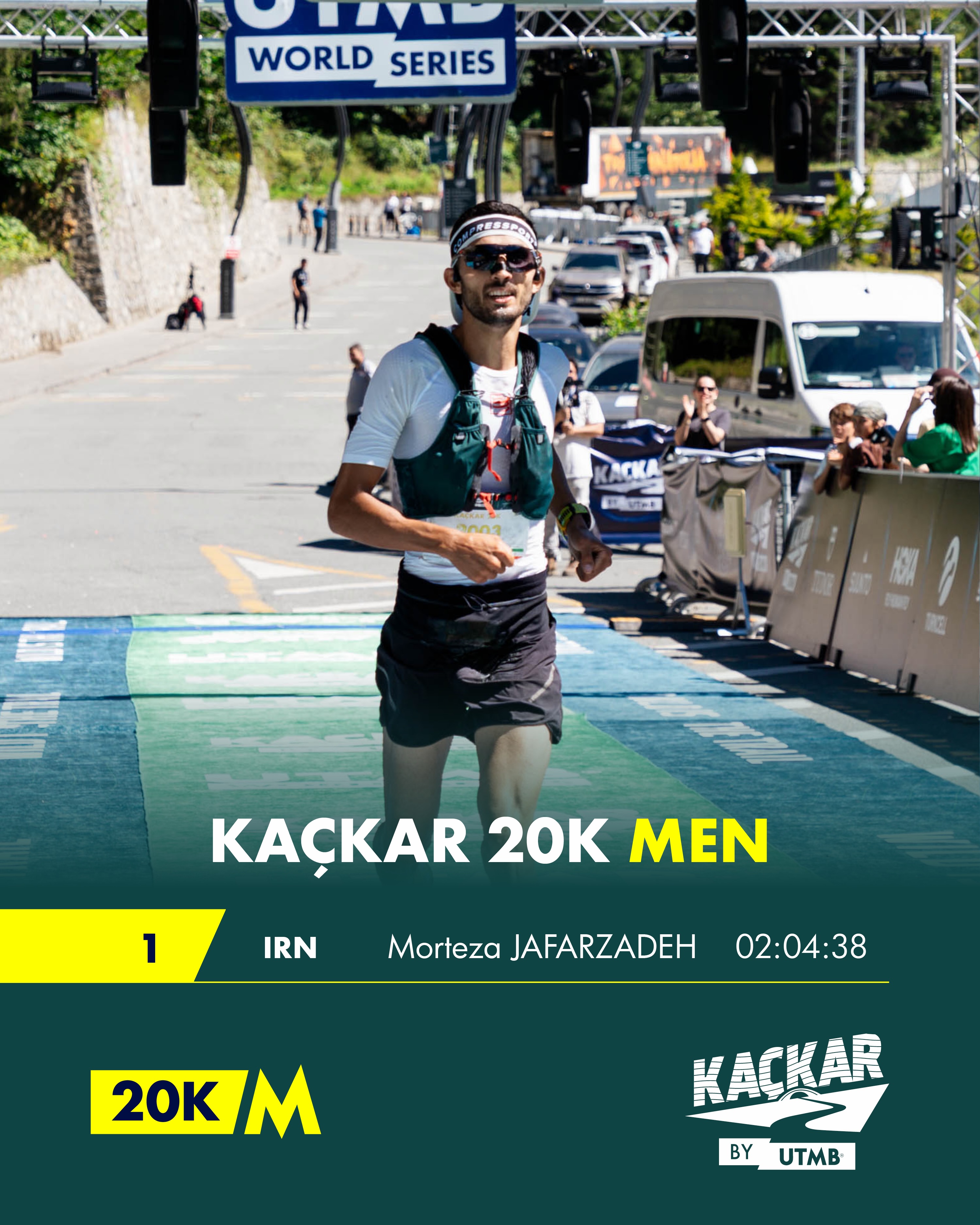
Kaçkar 20K — Men
🥇 Morteza Jafarzadeh (Iran) — 02:04:38
🥈 Loris Schina (Italy) — 02:07:33
🥉 Mestan Turhan (Türkiye) — 02:10:59
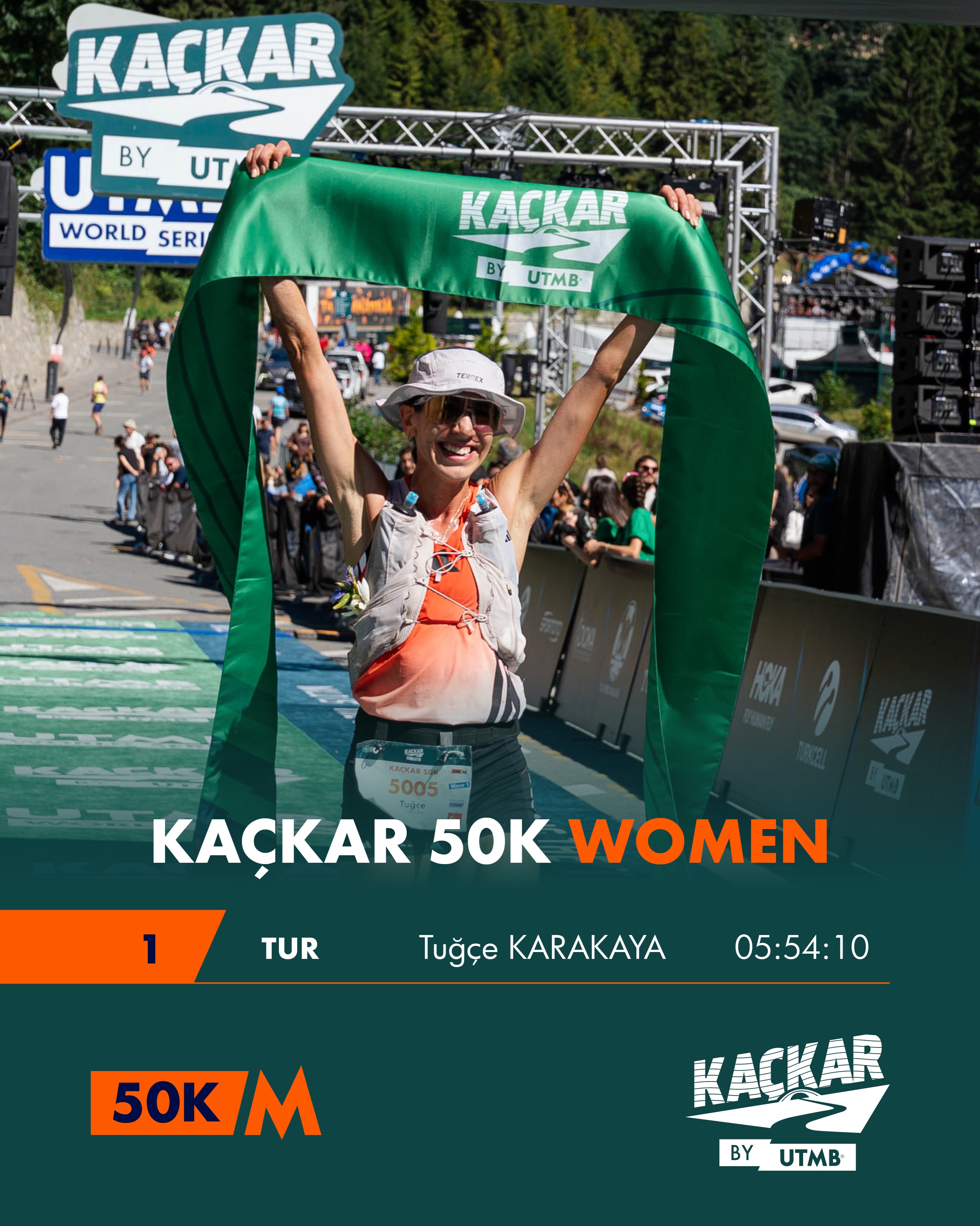
Kaçkar 50K — Women
🥇 Tuğçe Karakaya (Türkiye) — 05:54:10
🥈 Ainara Urrutia Yurrebaso (Spain) — 06:00:35
🥉 Fatma Taş (Türkiye) — 06:19:45
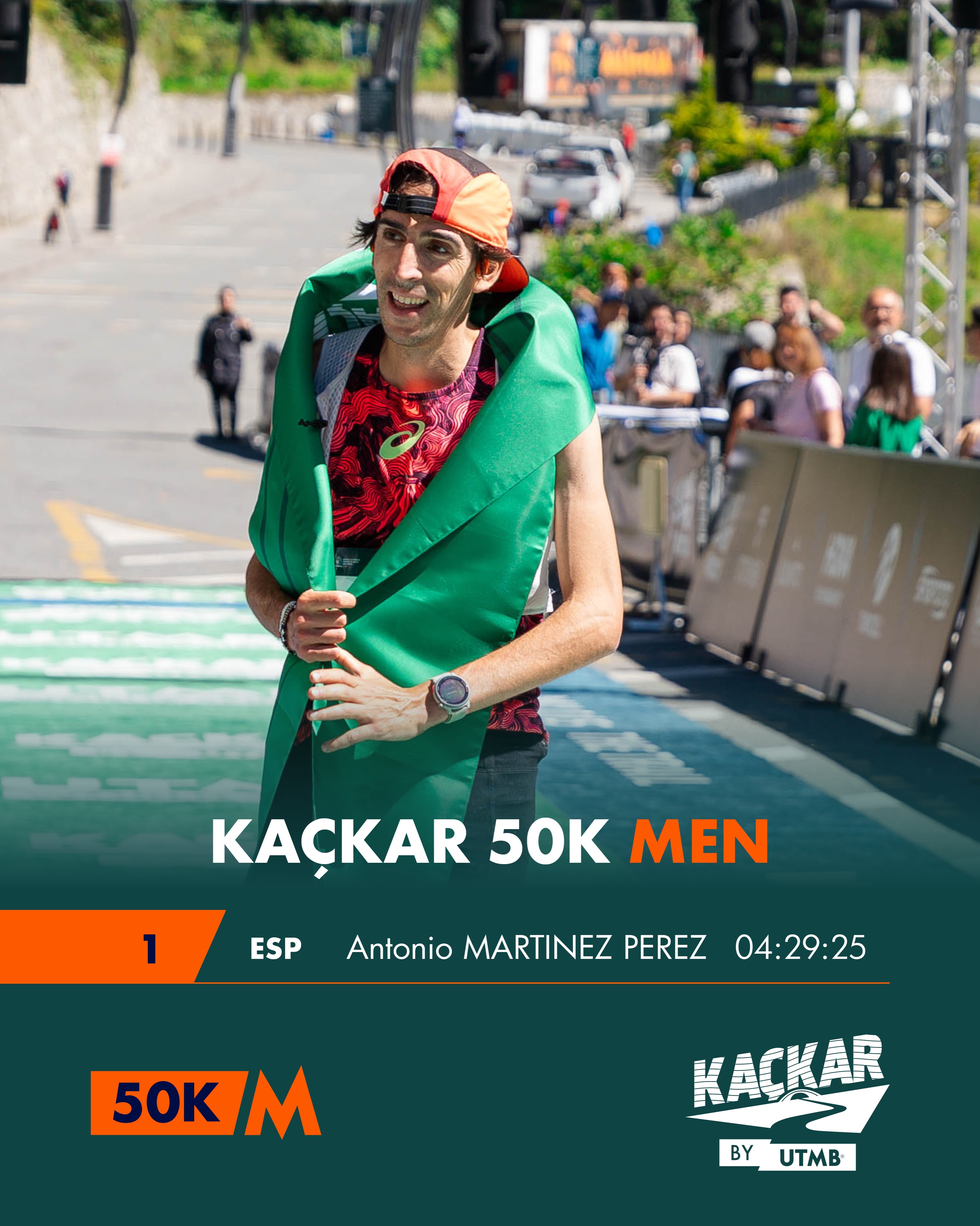
Kaçkar 50K — Men
🥇 Antonio Martinez Perez (Spain) — 04:29:25
🥈 Nicolás Molina (Spain) — 04:39:21
🥉 Dmitry Bregeda (AIN) — 05:17:46
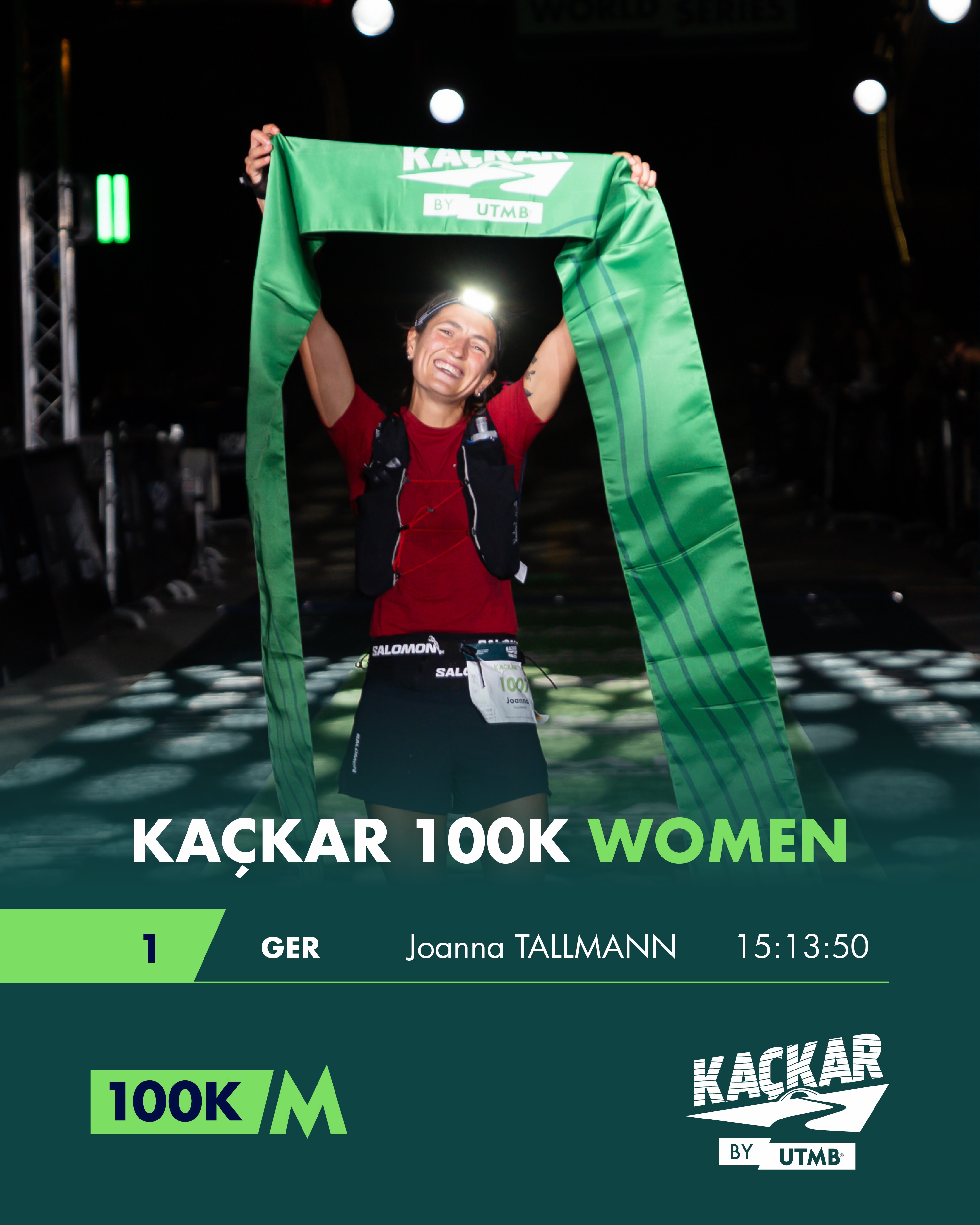
Kaçkar 100K — Women
🥇 Joanna Tallmann (Germany) — 15:13:50
🥈 Beyza Güzel (Türkiye) — 15:18:44
🥉 Sveta Becker (South Africa) — 16:09:44
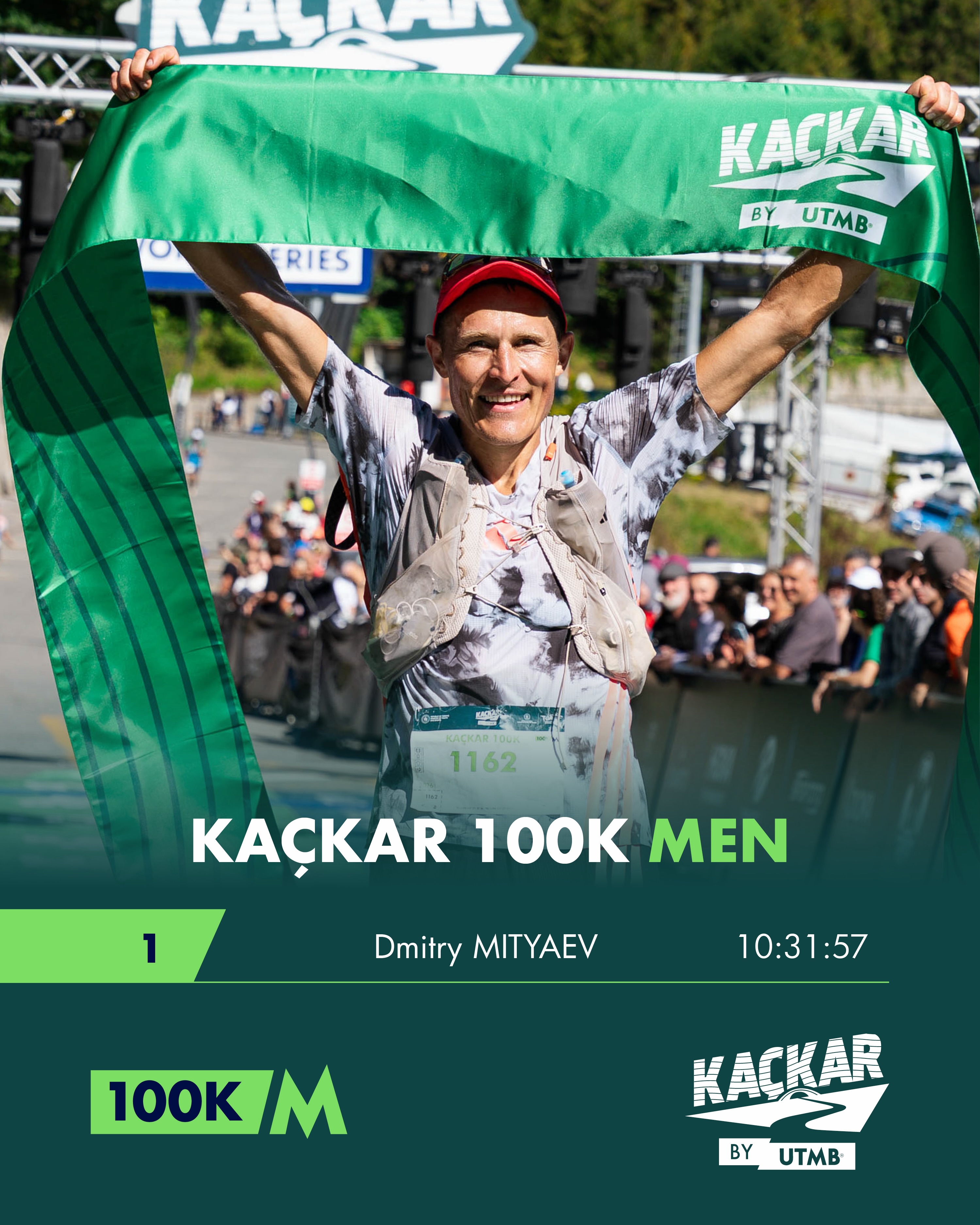
Kaçkar 100K — Men
🥇 Dmitry Mityaev (AIN) — 10:31:57
🥈 Michael Dimuantes (Australia) — 11:46:17
🥉 Yevhenii Yermolenko (Ukraine) — 13:04:26
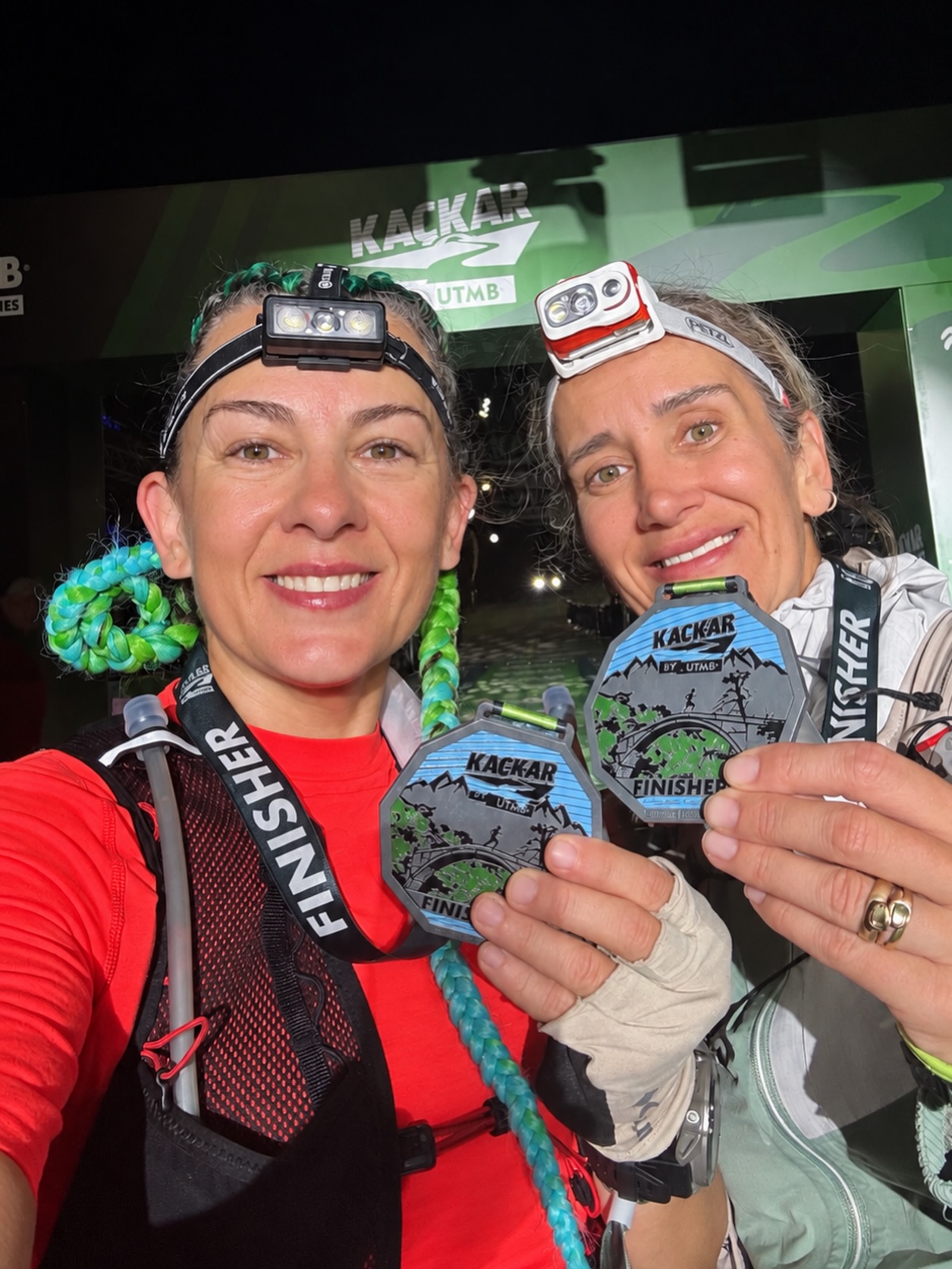
The results told one part of the weekend. The photographs told another: exhausted smiles, muddy legs, hands raised over wooden Kaçkar trophies, and athletes from different corners of the world standing together after hours spent alone with the mountain.
Why the Kaçkars Stay With You
A trail race is measured in kilometers, elevation, checkpoints, and finishing times.
But places are remembered differently.
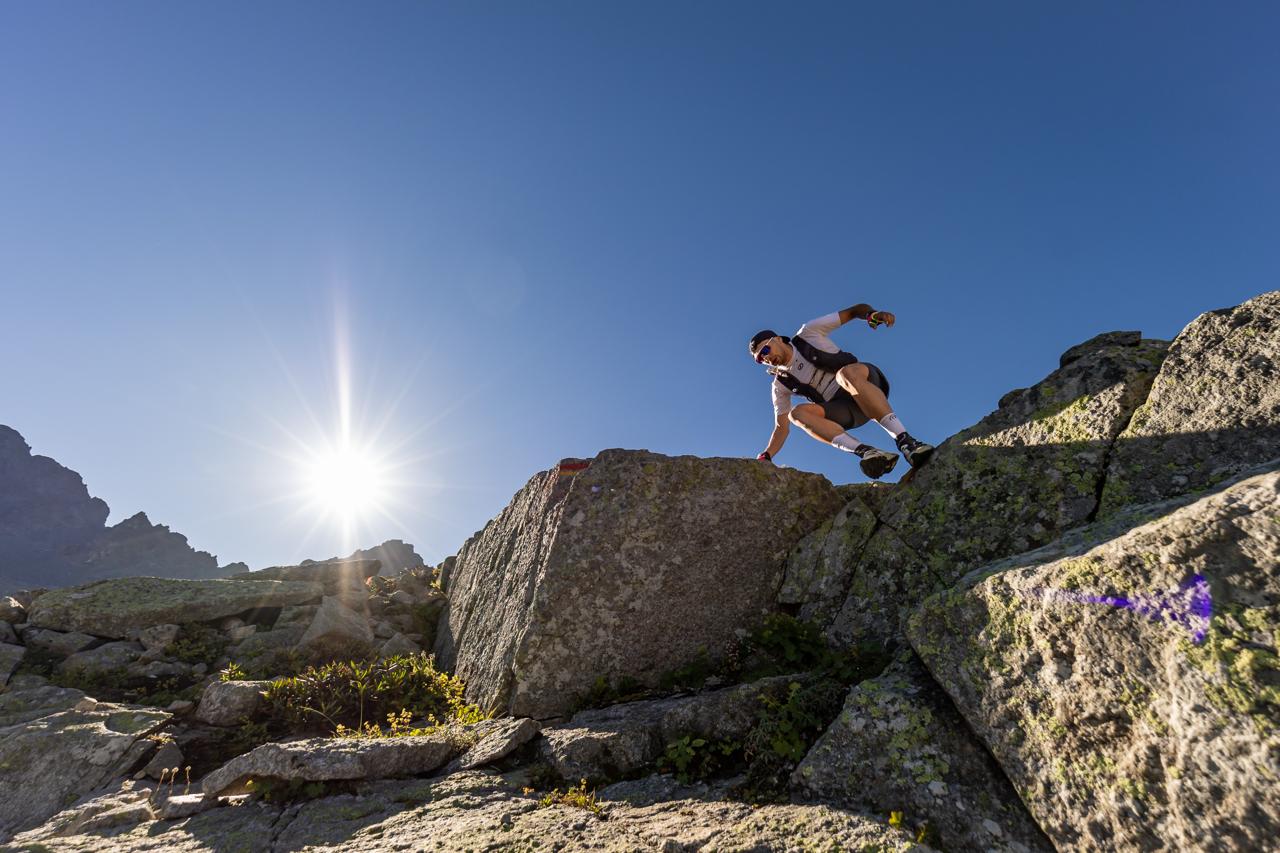
Maybe it’s the first runners leaving Ayder before dawn, with an entire day in the mountains still ahead of them.
Maybe it’s the sound of tulum and horon at the start line giving way, farther up the trail, to rivers, footsteps, and breath.
Or maybe it’s the realization that the path beneath your shoes was never created for a race at all—it was shaped by generations who crossed these mountains long before anyone thought to measure them in kilometers.
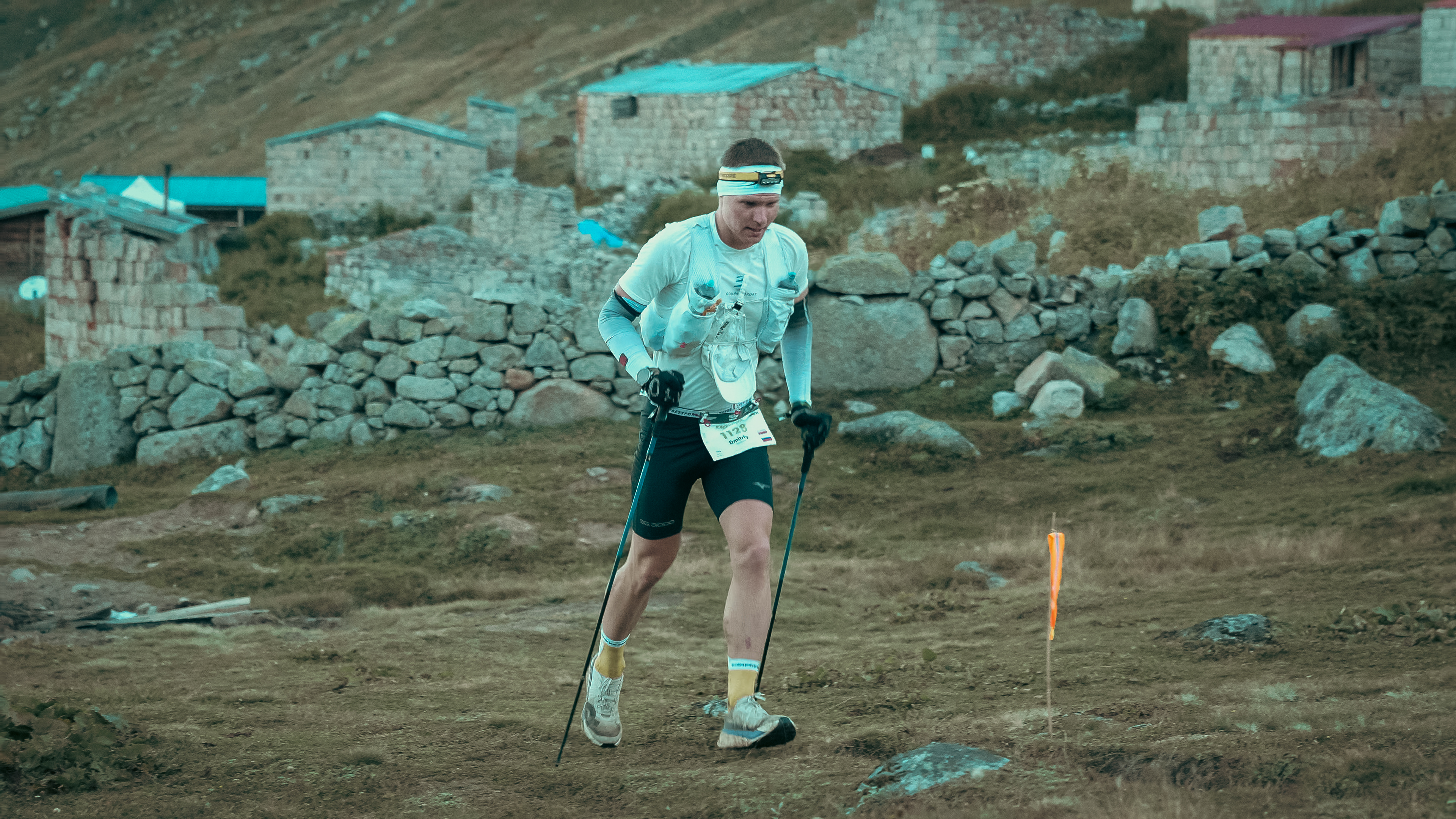
The race lasts three days. The paths have been here for centuries.
And somewhere between the two, Kaçkar by UTMB becomes more than a test of endurance. It becomes a way of meeting the mountains on their own terms.